ANGULAR
Complete Angular Tutorial For Beginners Introduction to Angular | What is Angular? Architecture Overview & Concepts of Angular How to Install Angular How to Create a new project in Angular Bootstrapping in Angular: How It Works Internally Angular Components Overview & Examples Data Binding in Angular Interpolation in Angular Property Binding in Angular Event Binding in Angular ngModel & Two way Data binding in Angular NgModelChange & Change Event in Angular Child/Nested Components in Angular angular directives angular ngFor directive ngSwitch, ngSwitchcase, ngSwitchDefa ult Angular Example How to use ngIf, else, then in Angular By example NgClass Example Conditionally apply class Angular ngStyle Directive Angular Trackby to improve ngFor Performance How to Create & Use Custom Directive In Angular Working with Angular Pipes How to Create Custom Pipe in Angular Formatting Dates with Angular Date Pipe Using Angular Async Pipe with ngIf & ngFor angular keyValue pipe Using Angular Pipes in Components or Services Angular Component Communication & Sharing Data Angular Pass data to child component Angular Pass data from Child to parent component Component Life Cycle Hooks in Angular Angular ngOnInit And ngOnDestroy Life Cycle hook Angular ngOnChanges life Cycle Hook Angular ngDoCheck Life Cycle Hook Angular Forms Tutorial: Fundamentals & Concep t s Angular Template-driven forms example How to set value in template-driven forms in Angular Angular Reactive Forms Example Using Angular FormBuilder to build Forms SetValue & PatchValue in Angular StatusChanges in Angular Forms ValueChanges in Angular Forms FormControl in Angular FormGroup in Angular Angular FormArray Example Nested FormArray Example Add Form Fields Dynamically SetValue & PatchValue in FormArray Angular Select Options Example in Angular Introduction to Angular Services Introduction to Angular Dependency Injection Angular Injector, @Injectable & @Inject Angular Providers: useClass, useValue, useFactory & useExisting Injection Token in Angular How Dependency Injection & Resolution Works in Angular Angular Singleton Service ProvidedIn root, any & platform in Angular @Self, @SkipSelf & @Optional Decorators Angular '@Host Decorator in Angular ViewProviders in Angular Angular Reactive Forms Validation Custom Validator in Angular Reactive Form Custom Validator with Parameters in Angular Inject Service Into Validator in Angular template_driven_form_validation_in_angular Custom Validator in Template Driven Forms in Angular Angular Async Validator Example Cross Field or Multi Field Validation Angular How to add Validators Dynamically using SetValidators in Angular Angular HttpClient Tutorial & Example Angular HTTP GET Example using httpclient Angular HTTP POST Example URL Parameters, Query Parameters, httpparams in Angular HttpClient Angular HTTPHeaders Example Understanding HTTP Interceptors in Angular Angular Routing Tutorial with Example Location Strategy in Angular Angular Route Params Angular : Child Routes / Nested Route Query Parameters in Angular Angular Pass Data to Route: Dynamic/Static RouterLink, Navigate & NavigateByUrl to Navigate Routes RouterLinkActive in Angular Angular Router Events ActivatedRoute in Angular Angular Guards Tutorial Angular CanActivate Guard Example Angular CanActivateChild Example Angular CanDeactivate Guard Angular Resolve Guard Introduction to Angular Modules or ngModule Angular Routing between modules Angular Folder Structure Best Practices Guide to Lazy loading in Angular Angular Preloading Strategy Angular CanLoad Guard Example Ng-Content & Content Projection in Angular Angular @input, @output & EventEmitter Template Reference Variable in Angular ng-container in Angular How to use ng-template & TemplateRef in Angular How to Use ngTemplateOutlet in Angular '@Hostbinding and @Hostlistener_in_Angular Understanding ViewChild, ViewChildren &erylist in Angular ElementRef in Angular Renderer2 Example: Manipulating DOM in Angular ContentChild and ContentChildren in Angular AfterViewInit, AfterViewChecked, AfterContentInit & AfterContentChecked in Angular Angular Decorators Observable in Angular using RxJs Create observable from a string, array & object in angular Create Observable from Event using FromEvent in Angular Using Angular observable pipe with example Angular Map Operator: Usage and Examples Filter Operator in Angular Observable Tap operator in Angular observable Using SwitchMap in Angular Using MergeMap in Angular Using concatMap in Angular Using ExhaustMap in Angular Take, TakeUntil, TakeWhile & TakeLast in Angular Observable First, Last & Single Operator in Angular Observable Skip, SkipUntil, SkipWhile & SkipLast Operators in Angular The Scan & Reduce operators in Angular DebounceTime & Debounce in Angular Delay & DelayWhen in Angular Using ThrowError in Angular Observable Using Catcherror Operator in Angular Observable ReTryWhen inReTry, ReTryWhen in Angular Observable Unsubscribing from an Observable in Angular Subjects in Angular ReplaySubject, BehaviorSubject & AsyncSubject in Angular Angular Observable Subject Example Sharing Data Between Components Angular Global CSS styles View Encapsulation in Angular Style binding in Angular Class Binding in Angular Angular Component Styles How to Install & Use Angular FontAwesome How to Add Bootstrap to Angular Angular Location Service: go/back/forward Angular How to use APP_INITIALIZER Angular Runtime Configuration Angular Environment Variables Error Handling in Angular Applications Angular HTTP Error Handling Angular CLI tutorial ng new in Angular CLI How to update Angular to latest version Migrate to Standalone Components in Angular Create Multiple Angular Apps in One Project Set Page Title Using Title Service Angular Example Dynamic Page Title based on Route in Angular Meta service in Angular. Add/Update Meta Tags Example Dynamic Meta Tags in Angular Angular Canonical URL Lazy Load Images in Angular Server Side Rendering Using Angular Universal The requested URL was not found on this server error in Angular Angular Examples & Sample Projects Best Resources to Learn Angular Best Angular Books in 2020

ngSwitch, ngSwitchcase, ngSwitchDefault Angular Example

The ngSwitch is an Angular structural directive, which allows us to add or remove DOM elements. It works in conjunction with ngSwitchcase, & ngSwitchDefault directives. It is similar to the switch statement of JavaScript. In this tutorial, we will look at the syntax of ngSwitch, ngSwitchcase & ngSwitchDefault. We will show you how to use these directives using an example. The examples include ngSwitch Example, multiple ngSwitchCase, Loose Equality Checks, etc.

You can download the source code from GitHub

Angular ngSwitch Directive

The ngSwitch is an Angular directive, which allows us to display one or more DOM elements based on some pre-defined condition.

The following is the syntax of ngSwitch. It contains three separate directives.ngSwitch, ngSwitchCase & ngSwitchDefault.

Syntax


<container_element [ngSwitch]="switch_expression">
    <inner_element *ngSwitchCase="match_expresson_1">...</inner_element>
    <inner_element *ngSwitchCase="match_expresson_2">...</inner_element>
    <inner_element *ngSwitchCase="match_expresson_3">...</inner_element>
    <inner_element *ngSwitchDefault>...</element>
</container_element>


ngSwitch

ngSwitch is bound to container_element like div etc. We assign a switch-expression to the ngSwitch via property binding syntax. Angular evaluates the switch_expression at runtime and based on its value displays or removes the elements from the DOM.

ngSwitchCase

ngSwitchCase is bound to an inner_element, which we must place inside the container_element. We use * (Asterix symbol), because it is a structural directive. We also assign a match_expression, which Angular evaluates at runtime. The Angular displays the inner_element only when the value of the match_expression matches the value of the switch_expression else it is removed from the DOM.

If there is more than one match, then it displays all of them.

ngSwitchDefault

ngSwitchDefault is also bound to an inner_element, which we must place inside the container_element. But it does not have any match_expression. If none of the ngSwitchCase match_expression matches the switch_expression, then the angular displays the element attached to the ngSwitchDefault

You can place ngSwitchDefault anywhere inside the container element and not necessarily at the bottom.

You are free to add more than one ngSwitchDefault directive. Angular displays all of them.

important points

  • You must place ngSwitchCase & ngSwitchDefault inside the ngSwitch directive
  • Angular displays every element, that matches the switch_expression
  • If there are no matches, angular displays all the elements, which has ngSwitchDefault directive
  • You can place one or more than one ngSwitchDefault anywhere inside the container element and not necessarily at the bottom.
  • Property Binding in AngularAny element within the ngSwitch statement but outside of any NgSwitchCase or ngSwitchDefault directive is displayed as it is.
  • The elements are not hidden but removed from the DOM.
  • Angular uses loose equality checks to compare the ngSwitchCase expression with the ngSwitch expression. This means that the empty string "" matches 0.
  • You can share the template between multiple ngSwitchCase using the ngTemplateOutlet
  • ngSwitch Example

    Create a new Angular project. Add the bootstrap CSS to the project by adding the following in the index.html


    <link rel="stylesheet" href="https://maxcdn.bootstrapcdn.com/bootstrap/4.0.0/css/bootstrap.min.css" integrity="sha384-Gn5384xqQ1aoWXA+058RXPxPg6fy4IWvTNh0E263XmFcJlSAwiGgFAW/dAiS6JXm" crossorigin="anonymous">


    Component Class

    Create a variable num in your Angular Component class


    num: number= 0;


    Template


    <div class='card'>
      <div class='card-header'>
        ngSwitch Example
      </div>
      <div class="card-body">
        Input string : <input type='text' [(ngModel)]="num" />
     
        <div [ngSwitch]="num">
          <div *ngSwitchCase="'1'">One</div>
          <div *ngSwitchCase="'2'">Two</div>
          <div *ngSwitchCase="'3'">Three</div>
          <div *ngSwitchCase="'4'">Four</div>
          <div *ngSwitchCase="'5'">Five</div>
          <div *ngSwitchDefault>This is Default</div>
        </div>
      </div>
    </div>


    Now let us examine the code in detail


    Input string : <input type='text' [(ngModel)] ="num"/>


    We bind the num variable to the input box.


    <div [ngSwitch]="num">


    We attach the ngSwitch directive to the div element, then bind it to the expression num.


    <div *ngSwitchCase="'1'">One</div>


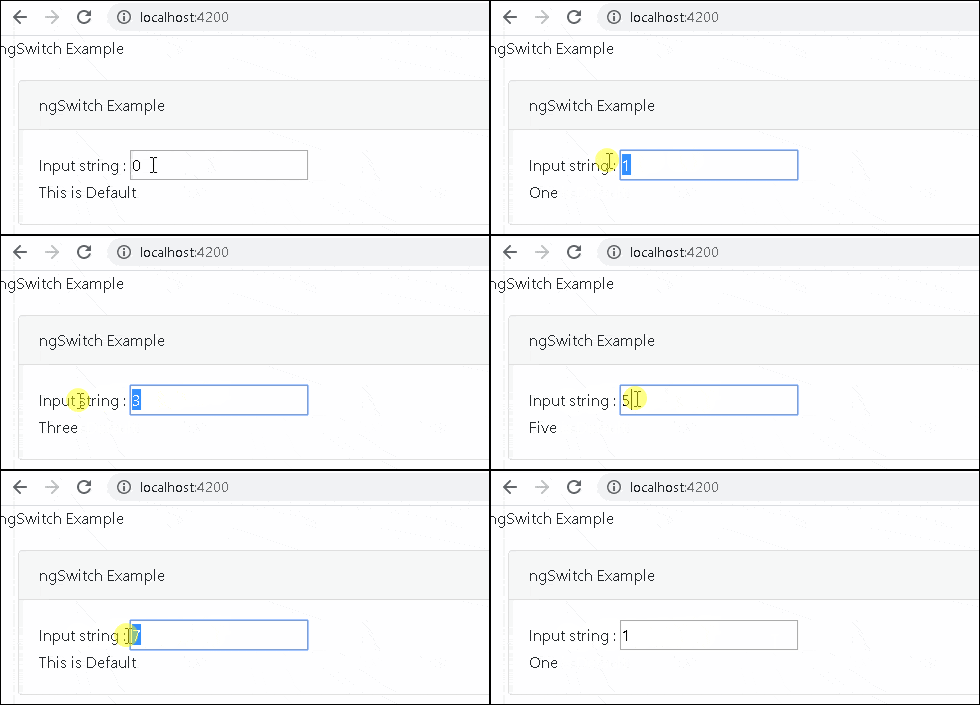
    Next, we have a few ngSwitchCase directives attached to the div element with matching expressions “1”,”2” etc. Whenever the num matches these expressions, the ngSwitchCase displays the element attached to it else it removes it from DOM.


    <div *ngSwitchDefault>This is Default</div>


    The ngSwithcDefault does not take any expression, but it is displays only when all other ngSwitchCase match expressions fail.
    image

    More Examples

    The following uses the array of objects instead of a variable.

    Component class


    class item {
        name: string;
        val: number;
    }
     
    export class AppComponent
    {
        items: item[] = [{name: 'One', val: 1}, {name: 'Two', val: 2}, {name: 'Three', val: 3}, {name: 'Four', val: 3}, {name: 'Five', val: 3}];
        selectedValue1: string= 'One';
        selectedValue2: string= 'One';
        selectedValue3: string= 'One';
        selectedValue4: string= 'One';
    }


    Template

    Note that we have two matches for *ngSwitchCase="'Two'".ngSwitchcase renders both.

                                  
    <div class='card'>
      <div class='card-header'>
        Multiple ngSwitchCase with same condition
      </div>
     
      <div class="card-body">
        <select [(ngModel)]="selectedValue1">
          <option *ngFor="let item of items;" [value]="item.name">{{item.name}}</option>
        </select>
     
        <div [ngSwitch]="selectedValue1">
          <p *ngSwitchCase="'One'">One is Selected</p>
          <p *ngSwitchCase="'Two'">Two is Selected</p>
          <p *ngSwitchCase="'Two'">Two Again used in another element</p>
          <p *ngSwitchDefault>This is Default</p>
        </div>
      </div>
     
    </div>


    You can also make use of ng-template directly instead of *ngSwitchCase. In fact *ngSwitchCase="'One'" is a shortcut to ng-template [ngSwitchCase]="'One'".


    <div class='card'>
      <div class='card-header'>
        ngSwitch using ng-template
      </div>
     
      <div class="card-body">
     
        <select [(ngModel)]="selectedValue2">
          <option *ngFor="let item of items;" [value]="item.name">{{item.name}}</option>
        </select>
     
        <div [ngSwitch]="selectedValue2">
          <ng-template [ngSwitchCase]="'One'">One is Selected</ng-template>
          <ng-template [ngSwitchCase]="'Two'">Two is Selected</ng-template>
          <ng-template ngSwitchDefault>This is Default</ng-template>
        </div>
     
      </div>
    </div>


    More than one ngSwitchDefault. Works perfectly ok.


    <div class='card'>
      <div class='card-header'>
        Multiple ngSwitchDefault Directives
      </div>
     
      <div class="card-body">
        <select [(ngModel)]="selectedValue3">
          <option *ngFor="let item of items;" [value]="item.name">{{item.name}}</option>
        </select>
     
     
        <div [ngSwitch]="selectedValue3">
          <div *ngSwitchCase="'One'">One is Selected</div>
          <div *ngSwitchDefault>This is Default 1</div>
          <div *ngSwitchCase="'Two'">Two is Selected</div>
          <div *ngSwitchDefault>This is Default 2</div>
        </div>
     
     
      </div>
    </div>


    Loose Equality Checks

    Angular uses loose equality checks to compare the ngSwitchCase expression with the ngSwitch expression. This means that the empty string "" matches 0.


    <div class='card'>
      <div class='card-header'>
        loose equality Empty string, "" matches 0
      </div>
     
      <div class="card-body">
     
        Input string : <input type='text' [(ngModel)]="num" />
     
        <div [ngSwitch]="num">
          <div *ngSwitchCase="0">Zero is Selected</div>
          <div *ngSwitchCase="1">One is Selected</div>
          <div *ngSwitchCase="2">Two is Selected</div>
          <div *ngSwitchDefault>This is Default 2</div>
        </div>
     
     
      </div>
    </div>


    Multiple / Sharing ngSwitchCase

    You may also want to share the template between two values. For Example One Template for the values One & Two & another template for values Three & Four. One option is to repeat the template under each switch case. Or you can also make use of the ngTemplateOutlet to share the template as shown below.


    <div class='card'>
      <div class='card-header'>
        Sharing Templates
      </div>
     
      <div class="card-body">
     
        <select [(ngModel)]="selectedValue4">
          <option *ngFor="let item of items;" [value]="item.name">{{item.name}}</option>
        </select>
        
     
        <ng-container [ngSwitch]="selectedValue4">
     
          <ng-container *ngSwitchCase="'One'">
            <ng-container *ngTemplateOutlet="sharedTemplate12"></ng-container>
          </ng-container>
          <ng-container *ngSwitchCase="'Two'">
            <ng-container *ngTemplateOutlet="sharedTemplate12"></ng-container>
          </ng-container>
     
          <ng-container *ngSwitchCase="'Three'">
            <ng-container *ngTemplateOutlet="sharedTemplate34"></ng-container>
          </ng-container>
     
          <ng-container *ngSwitchCase="'Four'">
            <ng-container *ngTemplateOutlet="sharedTemplate34"></ng-container>
          </ng-container>
     
          <ng-template #sharedTemplate12>Shared between 1,2</ng-template>
          <ng-template #sharedTemplate34>Shared between 3,4</ng-template>
          <ng-container *ngSwitchDefault>Default Template</ng-container>
     
        </ng-container>
     
      </div>
    </div>


    Source Code

    You can download the source code from GitHub